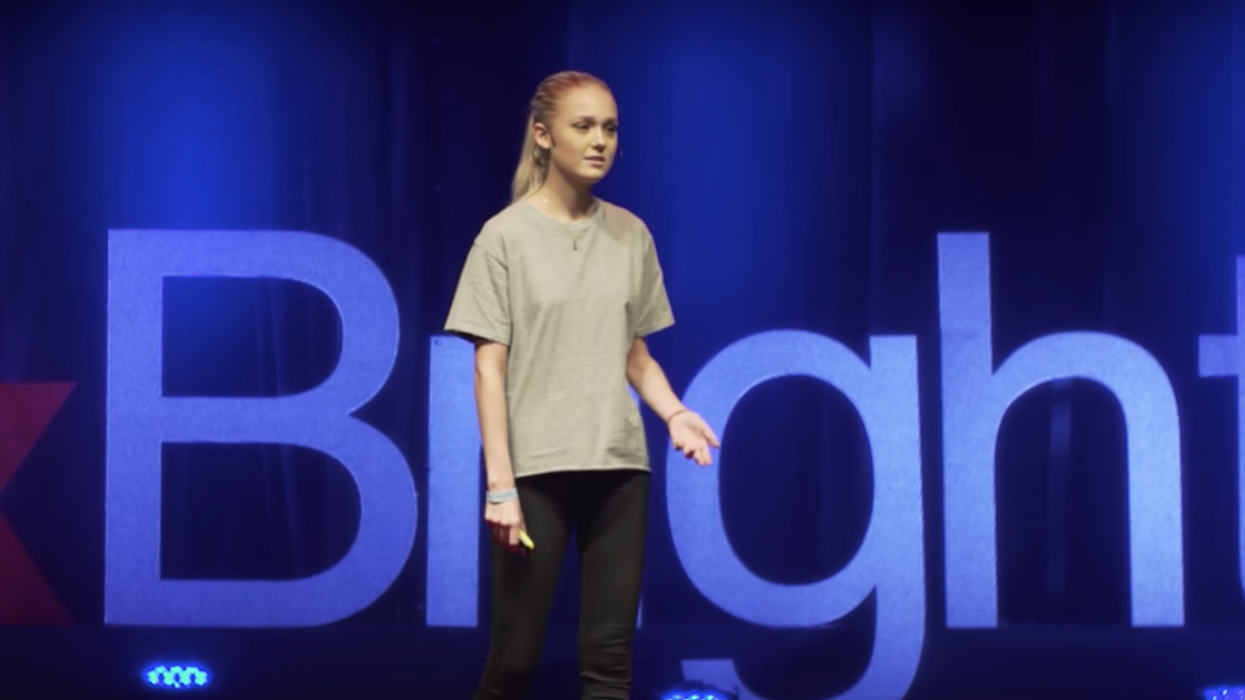

A 19-year-old female entrepreneur made over $400,000 last year and has funded her college education by naming Chinese babies.
You read that correctly: Beau Jessup, who hails from Great Britain, is the founder and CEO of Special Name, a website she designed to provide Chinese parents with culturally appropriate English names for their babies.
Jessup started the business in 2015. She made more than $60,000 naming 200,000 babies in the first six months. Since the site's launch, she has named a total of 677,900––and counting––Chinese babies. Her revenue last year? Over $400,000.
Jessup was inspired after accompanying her father on a business trip to China. One of his associates asked for help picking out a name for her three-year-old daughter.
After asking the woman about her hopes and dreams for her daughter, and of how she wanted people to be surprised by her daughter's achievements, Jessup suggested the name "Eliza," as in "Eliza Doolittle," the female lead of Pygmalion and My Fair Lady.
"I was honored and surprised," said Jessup.
"It seemed like a really important thing to do."
Jessup realized that it "might be profitable" to help Chinese parents provide their babies with Western names––which many Chinese speakers say endears them when interacting with native English speakers––after China officially ended its "one-child policy," which limited many families to just one child.
Special Name, a Chinese-language website to help parents with the name-selection process, was created not long afterward. She borrowed £1,500 (around $1,980) from her father to hire a freelance web developer to build the website and filled the database with 4,000 baby names, assigning each name several characteristics that she felt best represented them.
She recalls the process was rather "labor-intensive," but she's had a massive weight taken off her shoulders thanks to the use of algorithms:
"A lot of people ask me how I have time to name all these babies. Much like Google has time to find everything for everyone all at once, I use an algorithm."
As CNBC noted:
"The website works by asking users to choose five characteristics from a list of 12 that they would most like their child to embody. An algorithm then selects three gender-specific names matched to those five characteristics."
"Users are then encouraged to share the three suggestions with their friends and family — there's a direct link to Chinese messaging app WeChat on the site — to help them settle on their favorite and avoid any 'cultural mistakes'."
"The process takes just three minutes."
Eventually Jessup began charging a small fee for the service. The money she's made has gone toward her college fees and paying back her father's loan with interest. She says the site is fully automated and only requires a small team in China to maintain it. She can now focus entirely on her studies and still finds time to update the database each month.
We call this "moxie" where we're from, and Jessup has it in spades, as observers have pointed out.
Here's a TEDx talk Jessup gave about her business journey:
How I Named 250,000 Chinese Babies | Beau Jessup | TEDxBrightonwww.youtube.com
#Girlboss?
We think so.


 @devynnehaddoxx/TikTok
 @devynnehaddoxx/TikTok
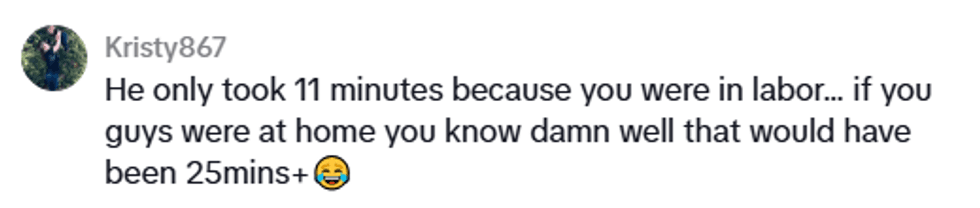 @devynnehaddoxx/TikTok
 @devynnehaddoxx/TikTok
 @devynnehaddoxx/TikTok
 @devynnehaddoxx/TikTok
 @devynnehaddoxx/TikTok
 @devynnehaddoxx/TikTok
 @devynnehaddoxx/TikTok
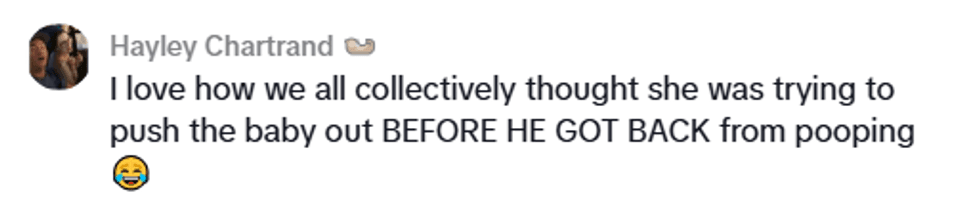 @devynnehaddoxx/TikTok
 Cover Images