
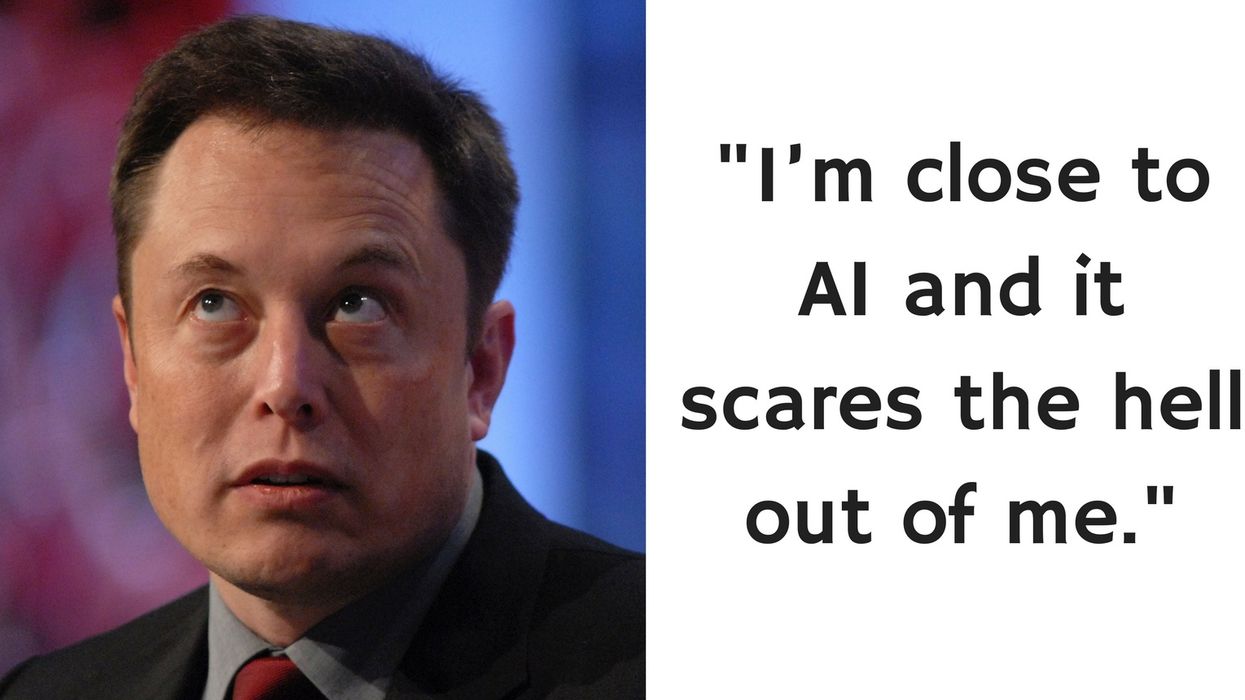

If there's anyone we should listen to when it comes to predictions about technology's future, it's probably Elon Musk, the creator of PayPal, Tesla, and SpaceX. Although our dicey relationship with North Korea often snags headlines because of the rogue nation's nuclear capabilities, Musk worries about something else much more than nuclear war. At HBO's Westworld panel at South by Southwest, the tech icon made an appearance and warned the crowd about the imminent danger posed by artificial intelligence (AI).
Musk commented on AI and what he's seen firsthand:
I'm close to AI and it scares the hell out of me. It's capable of vastly more than anyone knows, and the improvement is exponential.
He's not lying when he says he's "close" to the technology. Musk is a chairman and co-founder of the company OpenAI.
OpenAI's intelligences learn and evolve over time, just like humans do. In fact, after letting the AI play the popular video game DOTA 2 by itself for about a week, it was able to take on one of the best players in the world...and win. Of course, the win came with some pretty big caveats (both players had to use a certain character, the match had to be 1 on 1, and the human player never got the opportunity to study the AI's playing style) but it was still an impressive feat for a program which taught itself how to play.
Musk also mentioned AlphaGo, the AI developed by Google Deepmind to play the ancient Chinese board game "Go."
The program has not only beat every other artificial "Go" player, but also took on both European champion Fan Hui and world champion Lee Sedol. AlphaGo won four out of five games, embarrassing China so much that they censored the live broadcast of the competition after Go defeated Sedol in the first match.
The documentary 'AlphaGo' on Netflix tells the AI's story, and VICE covered the basics in this video:
Musk commented on AlphaGo to the crowd at SXSW:
Those experts who think AI is not progressing: look at things like GO. Their batting average is quite weak.
The danger of AI is much greater than the danger of nuclear warheads — by a lot. Mark my words, AI is far more dangerous than nukes.
Musk isn't the only genius who's creeped out by robots. Stephon Hawking has made similar statements about AI in the past:
Unless we learn how to prepare for, and avoid, the potential risks, AI could be the worst event in the history of our civilization. It brings dangers, like powerful autonomous weapons, or new ways for the few to oppress the many. It could bring great disruption to our economy.
Musk is calling for additional oversight of AI technology while simultaneously pushing the technology forward and utilizing it.
Artificial Intelligences, while terrifying to the CEO, also play a large role at SpaceX, where rockets land autonomously on drone ships while the nearest human is miles away. In Musk's mind, advancing AI is worth the risk to help us reach the next era in human evolution.
H/T - Indy100, Vanity Fair

 reply to @brilynhollyhand/Instagram
 reply to @brilynhollyhand/Instagram
 reply to @brilynhollyhand/Instagram
 reply to @brilynhollyhand/Instagram
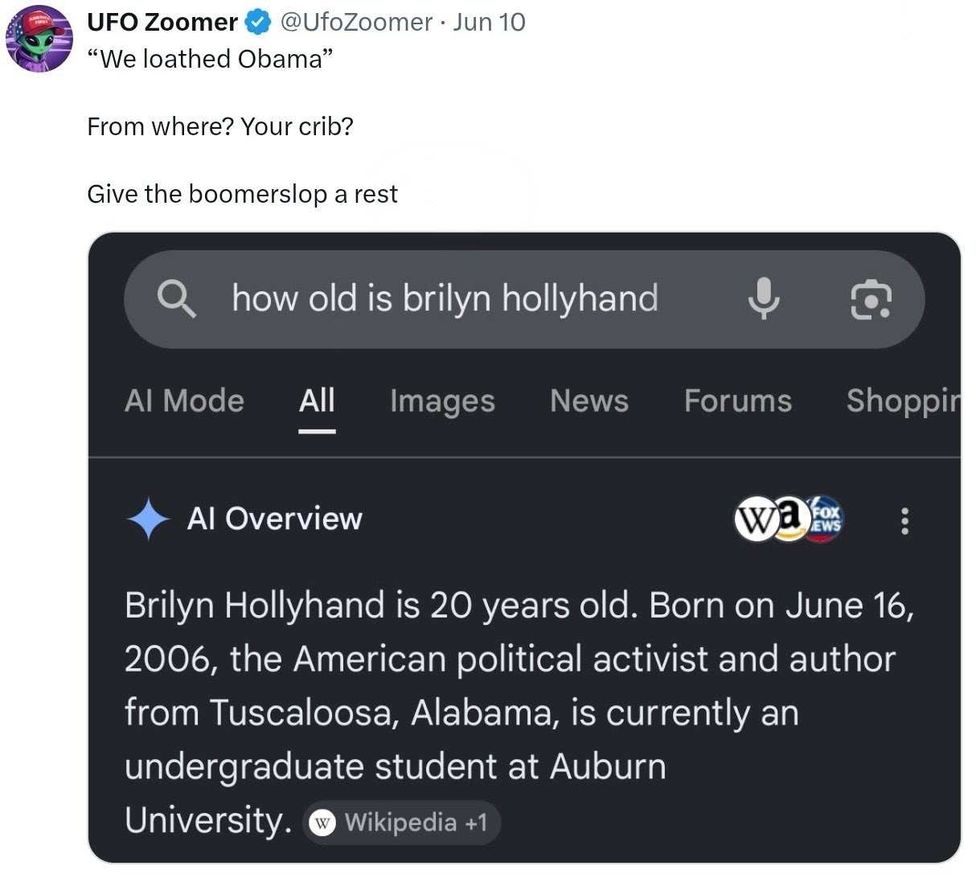 reply to @brilynhollyhand/X
 reply to @brilynhollyhand/Instagram
 reply to @brilynhollyhand/Instagram
 reply to @brilynhollyhand/Instagram
 reply to @brilynhollyhand/Instagram
 reply to @brilynhollyhand/Instagram
 reply to @brilynhollyhand/Instagram
 u/Chemical_Grape_2150/Reddit
 u/Head_Patience7136/Reddit
 u/Internal_Praline_658/Reddit
 u/redelectro7/Reddit
 u/Past_Dimension_5133/Reddit
 u/Illustrious_Bad_2980/Reddit
 u/Bread_Low/Reddit
 u/crystal_clear24/Reddit
 u/throwawaysixties/Reddit
 u/RoRoRicardo/Reddit
 u/Damaged_G00d5/Reddit