
Skip to content
Search AI Powered

Latest Stories

Scientists Develop 'Artificial Skin' That Can Wrap Around Mobile Phones To Make Them Ticklish

Scientists Develop 'Artificial Skin' That Can Wrap Around Mobile Phones To Make Them Ticklish
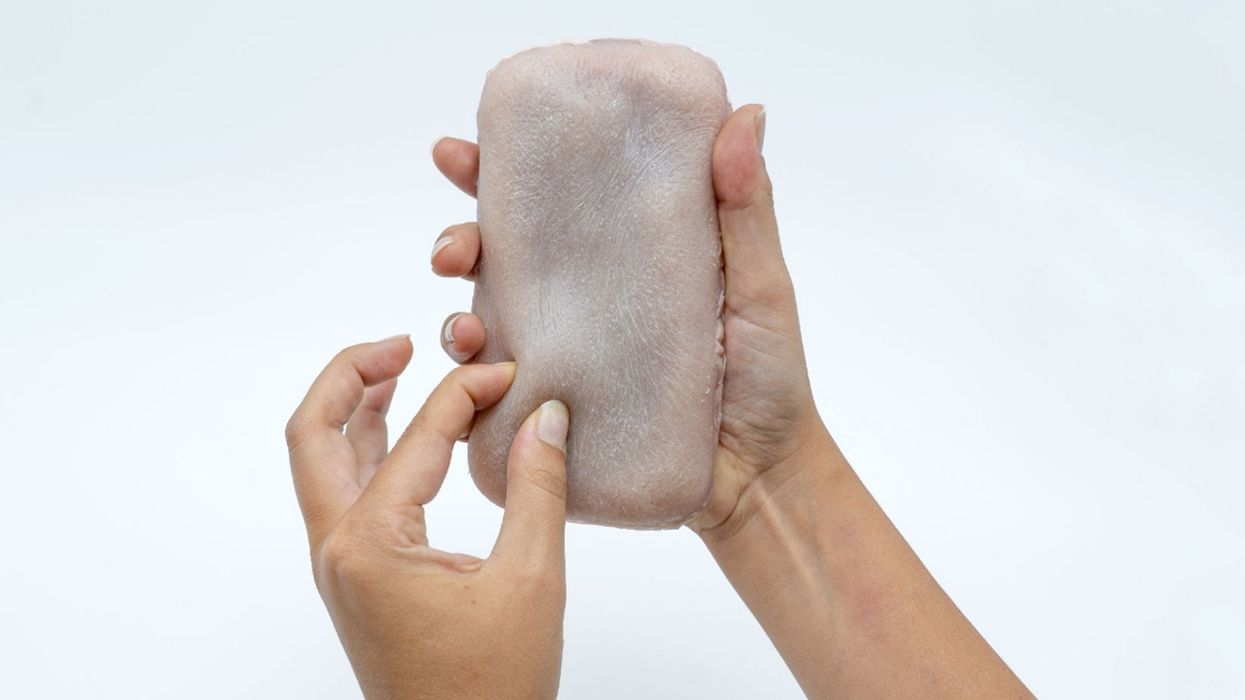
(Marc Teyssier/Telecomm ParisTech)

Scientists have developed an “artificial skin" that they say can wrap around devices such as smartphones and make them ticklish.


The prototype, which has been designed to look like and mimic human skin, responds to different forms of human contact such as tickling, caressing and pinching.

Called Skin-On interface, it can be attached to mobile phones, wearable devices and laptop touchpads.

The technology was developed by researchers at the University of Bristol in partnership with Telecomm ParisTech and Sorbonne University in Paris.

The team says their work opens the door for a possible future with “anthropomorphic devices" – where gizmos have human characteristics.
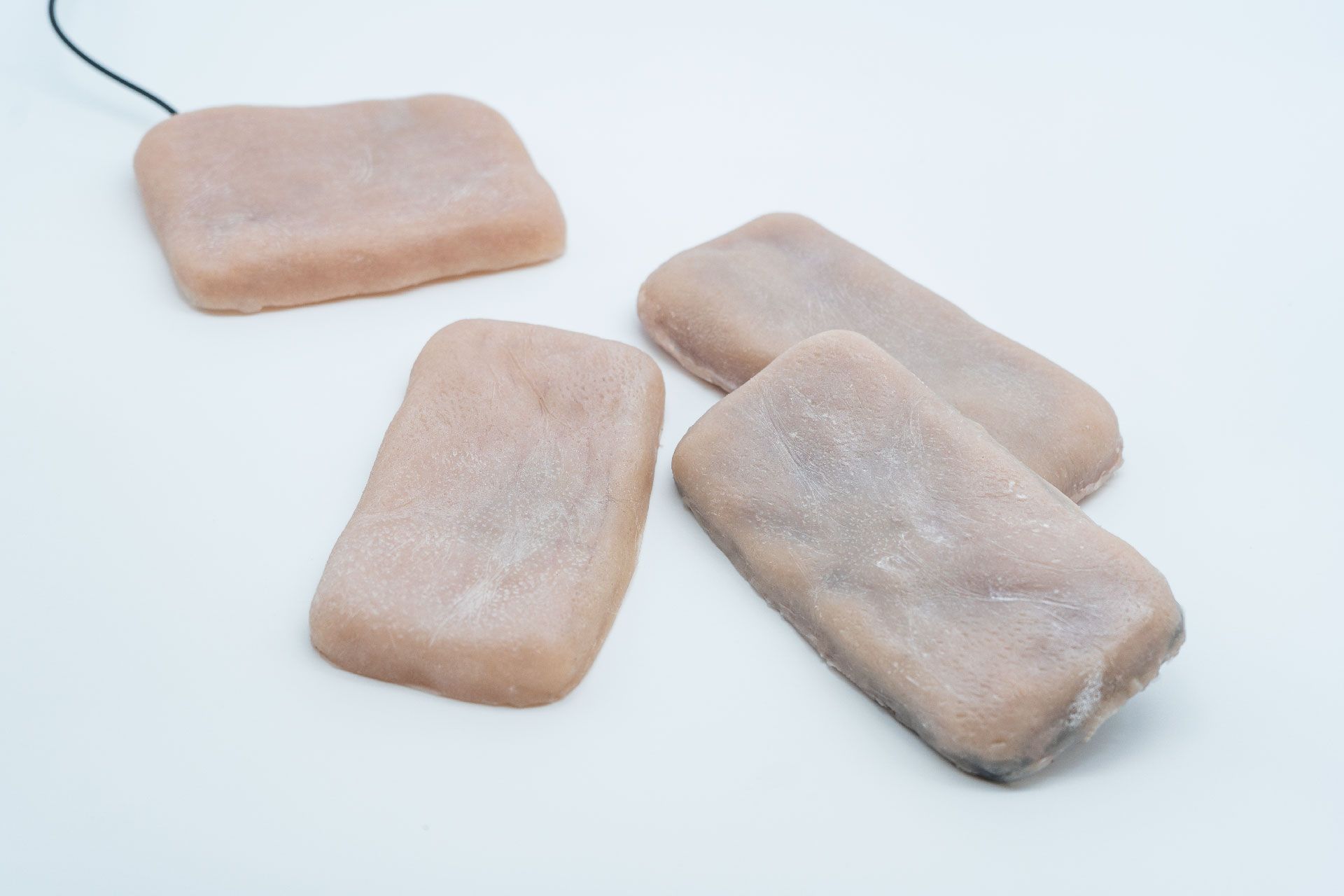
The researchers say their artificial skin can make smart devices more 'human like' (Marc Teyssier/Telecomm ParisTech)

Dr. Anne Roudaut, associate professor at the University of Bristol, told the PA news agency: “It [the artificial skin] may look unconventional probably because we are used to our senseless and rigid casings, but we feel there are strong advantages of using more malleable technologies.

“And the familiarity of the skin provides a more natural interface for end-users."

The artificial skin was created using two layers of silicone – dubbed “dermis" and “hypodermis" layers – with an electrode layer in the middle made up of ultra-thin wires that act as sensors.

Two different types of silicone were dipped in pigment and moulded to give the creation a skin-like texture.

The researchers said their artificial skin allows devices to “feel the user's grasp" and has the ability “to detect interactions such as tickling, caressing, even twisting and pinching."
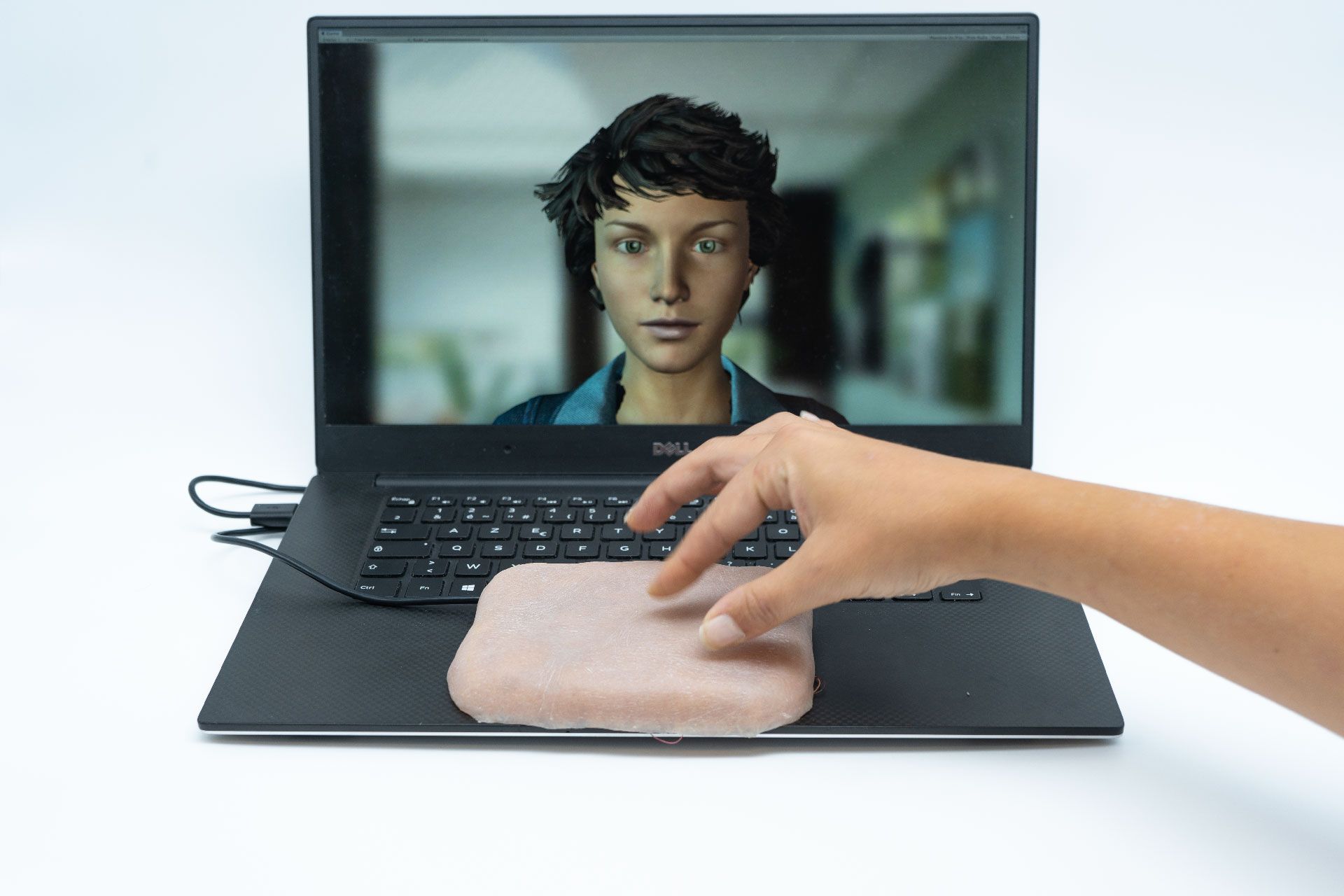
Artificial skin.The prototype responds to different types of human contact including tickling, twisting and even pinching (Marc Teyssier/Telecomm ParisTech)

One of the things the researchers said they were able to demonstrate was “tactile emotions" with use of emojis.

Marc Teyssier, a PhD student at Telecomm ParisTech and lead study author, said: “A strong grip conveys anger while tickling the skin displays a laughing emoji and tapping creates a surprised emoji."

He told PA: “This skin has a subtle surface texture – the sensing is performed in the dermis and the hypodermis layer (fat layer) and the elasticity is what allows us to perform expressive gestures such as pinching."

The team believe that their work, which is being presented at the 32nd ACM User Interface Software and Technology Symposium in the U.S., could allow people to have a richer emotional experience while using mobile phones or smartwatches.

Teyssier added: “When we are talking to someone face-to-face, we sometimes use touch to convey emotions and more generally enrich the discourse.

“Now that mediated communication is performed through the devices, we lost this communication modality.
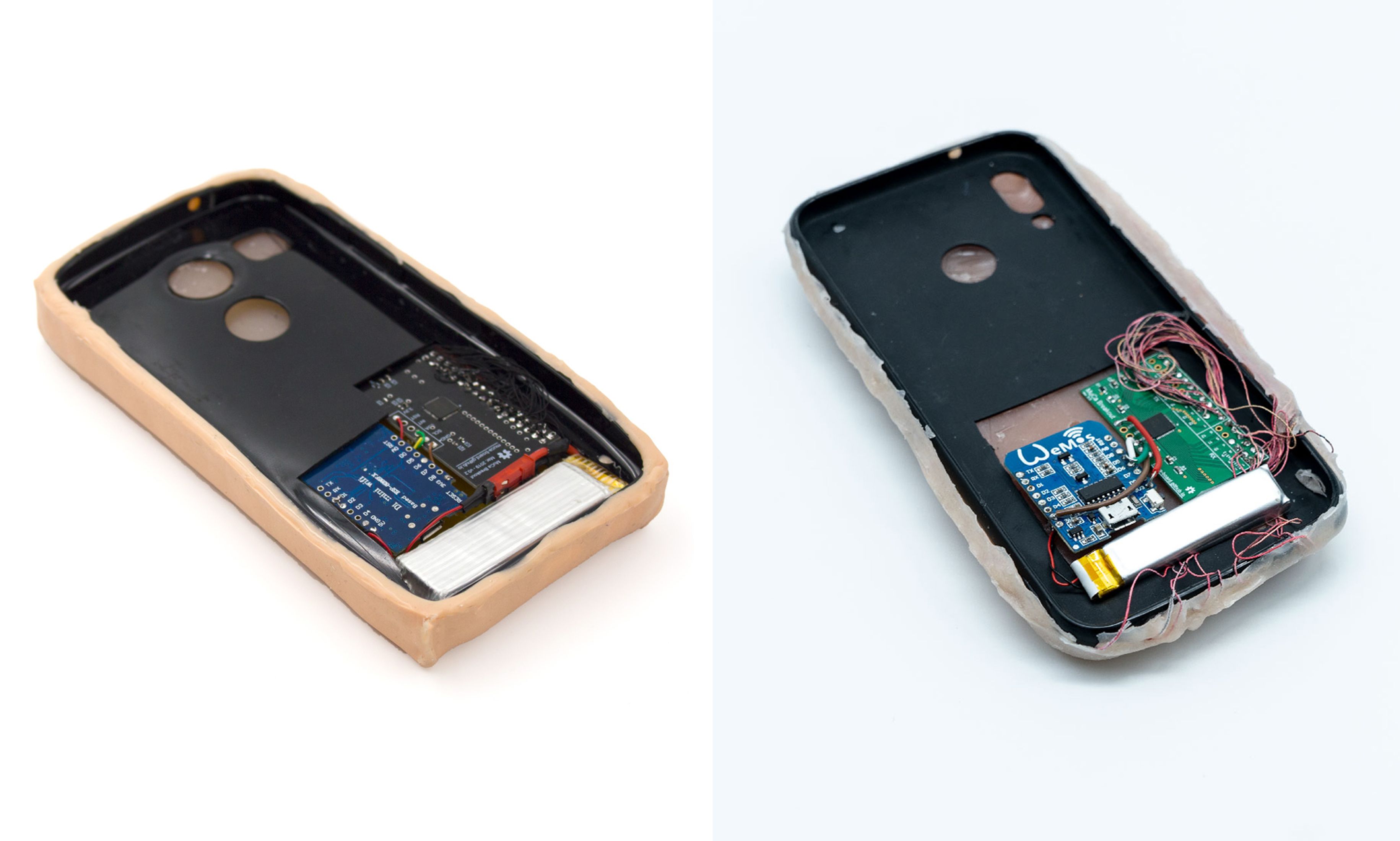
The artificial skin augments interactive devices such as phones, wearables or computers (Marc Teyssier/Telecomm ParisTech)

“With this project, we tried to combine the best of the two.

“The prototypes we developed propose a possible future with anthropomorphic devices."

While the concept of artificial skin has been explored in the field of robotics as scientists attempt to develop robots that look and act like humans, the researchers said they were more interested in working with everyday devices.

Roudaut added: “We have seen many works trying to augment human with parts of machines, here we look at the other way around and try to make the devices we use every day more like us, ie, human-like."


George Takei's Halloween Costume Contest 2019

More from Trending

Miriam Margolyes
David Levenson/Getty Images

'Harry Potter' Star Miriam Margolyes Offers Mic Drop Explanation For Why Respecting Pronouns Matters

Sometimes it is just that easy to make people happy. This is a lesson learned over and over in our lives, but that's because it's an important one.

Actor Miriam Margolyes shared how she learned to change her behavior to make others happier. Margolyes appeared on The Graham Norton Show recently and brought up a fairly polarizing subject in the United Kingdom: trans people.

Keep ReadingShow less
Elon Musk looks on during a public appearance, as the billionaire once again turns a newsroom style decision into a culture-war grievance broadcast to millions on X.
BRENDAN SMIALOWSKI/AFP via Getty Images

Elon Musk Cries Racism After Associated Press Explains Why They Capitalize 'Black' But Not 'White'

Elon Musk has spent the year picking fights, from health research funding to imagined productivity crises among federal workers and whether DOGE accomplished anything at all besides leaving chaos in its wake.

His latest grievance, however, is thinly disguised as grammatical. Specifically, he is once again furious that the Associated Press (AP) capitalizes “Black” while keeping “white” lowercase.

Keep ReadingShow less
Elon Musk; Yale University School of Engineering and Applied Science
Brendan Smialowski/AFP via Getty Images; Plexi Images/GHI/UCG/Universal Images Group via Getty Images

Elon Musk Gets Brutal Wakeup Call After Claiming That Yale's Lack Of Republican Faculty Is 'Outrageous Bigotry'

Elon Musk—who has repeatedly whined about diversity, equity, and inclusion (DEI)—took to his social media platform to whine about a lack of conservative faculty at Yale University.

Musk shared data compiled by The Buckley Institute (TBI), a conservative-leaning organization founded at Yale in 2010. TBI found 82.3% of faculty self-identified as Democrats or primarily supporting Democratic candidates, 15% identified as independents, while only 2.3% identified as Republicans.

Keep ReadingShow less
Barry Manilow
Mat Hayward/Getty Images

Barry Manilow Speaks Out After Postponing Farewell Tour Dates Due To Lung Cancer Scare

"Looks Like We Made It" singer Barry Manilow is in the process of saying goodbye to the stage and meeting his fans in-person, but he has to press pause for a few months after receiving a jarring diagnosis.

On December 22, 2025, the "Mandy" singer posted on Facebook, explaining that a "cancerous spot" had been discovered on his left lung.

Keep ReadingShow less
Chris Evans as Steve Rogers in Avengers: Endgame, the last time audiences saw Captain America before his unexpected return was teased for Avengers: Doomsday.
Disney/Marvel Studios

Marvel Just Confirmed That Chris Evans Is Returning For 'Avengers: Doomsday'—And Fans Have Mixed Feelings

Folks, once again, continuity is more of a suggestion than a rule in the Marvel Cinematic Universe. Marvel has officially confirmed that Chris Evans is returning as Steve Rogers in Avengers: Doomsday, and the internet has responded exactly how you’d expect: screaming, celebrating, arguing, and a very justified side-eye toward how Sam Wilson keeps getting treated.

The confirmation comes via a teaser now playing exclusively in theaters ahead of Avatar: Fire and Ash. There is no official online release, despite leaks circulating. If you didn’t catch it on the big screen, Marvel’s response is essentially: sorry, guess you had to be there.

Keep ReadingShow less